
The Türkiye Century Maarif Model, introduced by the Ministry of National Education, is built on a skills‑oriented philosophy that moves beyond rote memorization. Instead, it embraces the student’s intellectual, emotional, and social development as a holistic whole.
“Education is not the act of storing knowledge in the mind; it is the art of transforming that knowledge into action through character, reason, and the filter of real life.”
This model initiates a profound paradigm shift in the Turkish education system, leaving behind traditional structures that produce uniform, exam‑driven students. Its core philosophy rests on holistic education, which views the learner not merely as an academic competitor but as a complete individual—intellectually, socially, emotionally, morally, and physically.
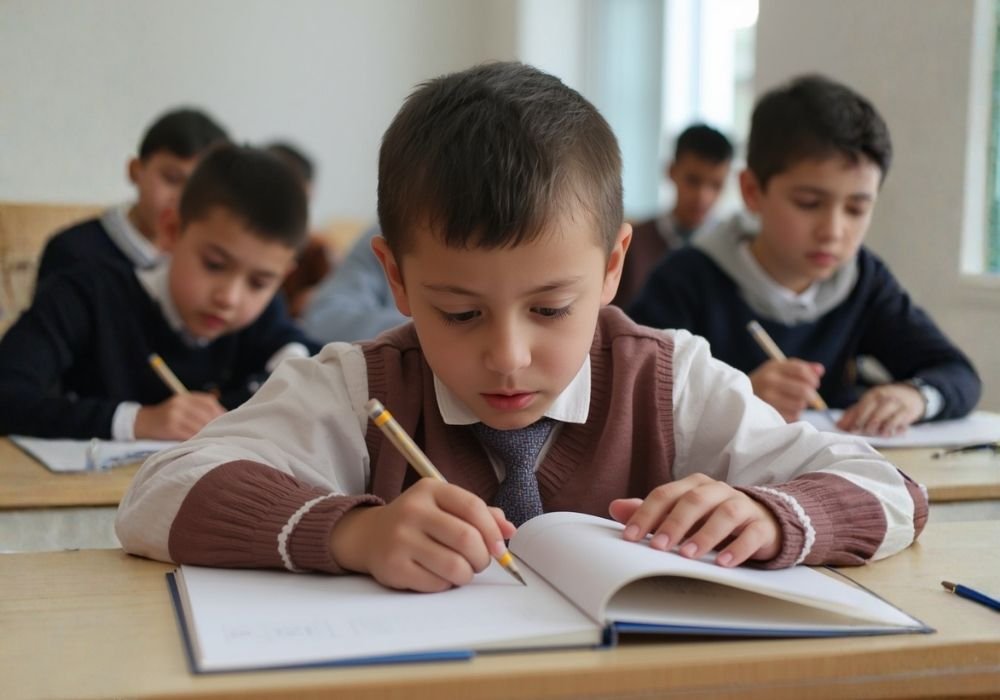
At SME Academy, we fully embrace this spirit with our “boutique” philosophy of less but essential. Our goal is not only to ensure success in school exams or centralized assessments, but to cultivate students who internalize knowledge and grow into competent and virtuous individuals.
Key Innovations and Differences
The sharp distinctions between the old system and the Türkiye Century Maarif Model have fundamentally transformed how students study and approach problem‑solving:
Active Student, Designer Teacher Teachers are no longer passive transmitters of information. They now act as guides and designers who shape meaningful learning experiences.
From “What Will We Teach?” to “What Kind of Person?” While the old system was built on content density, the new model connects knowledge with moral and human values through the Virtue‑Value‑Action Framework. Knowledge is valuable only when it has meaning in real life.
From Memorization to Skills and Context Students are no longer expected to recite formulas or definitions. Instead, they are guided to solve real‑life problems, interpret data, and establish cause‑and‑effect relationships.
Open‑Ended Questioning and Achievement Analysis: The SME Academy Difference
One of the most distinctive innovations of the Maarif Model is the emphasis on open‑ended questions, justification, and scenario‑based analysis in exams and assessments. The era of “Which option is correct?” has given way to “How did you reach this conclusion, and what is your reasoning?”
At SME Academy, we address curriculum achievements and new‑generation question types through a systematic approach:
Sample Module: Achievement and Open‑Ended Question Coaching
Achievement and Context‑Focused Question Analysis
Conceptual Accuracy: Not rote memorization, but the ability to explain logic in one’s own words.
Real‑Life Scenario: Establishing the everyday relevance of the problem.
Reasoned Solution: Answering “Why this formula, why this logic?” with a coherent chain of reasoning.
| Stage | Traditional Approach (Old System) | SME Academy & Maarif Model Approach |
|---|---|---|
| Topic Delivery | Writing formulas on the board and drilling similar question types. | Discussing the origin, logic, and real‑life function of the concept (holistic approach). |
| Practice | Multiple‑choice tests with elimination tactics. | Step‑by‑step solutions based on texts or graphs, with written justification and interpretation. |
| Assessment & Error Analysis | “I got three wrong, so I must have forgotten the formula.” | “At which step did my reasoning break down? Where did I fail to apply knowledge to real life?”—deep error analysis. |